
You spend weeks planting and watering, only to wake up to dug-up soil and half-eaten veggies. Sound familiar? If you’re desperate to figure out how to keep squirrels out of garden beds, you’re not alone. These agile pests are clever, persistent, and surprisingly destructive. However, don’t worry – there are proven, humane ways to protect your plants and enjoy a peaceful garden again.
How to keep squirrels out of the garden
To keep squirrels out of your garden, use a mix of scent repellents, physical barriers, and distraction techniques. Spray peppermint oil, garlic, or capsaicin-based repellents around plants. Install chicken wire, row covers, or cloches to block access. Add motion-activated sprinklers to startle intruders. Finally, offer a decoy feeding area away from your garden with foods squirrels like; this can reduce their interest in your crops.
Why Squirrels Invade Gardens?
Squirrels don’t raid your garden just for fun; they’re looking for food, water, and shelter. Gardens offer all three. Fresh produce, bulbs, and tender shoots are irresistible to them, especially in dry months when wild resources are low.
They also engage in excavation habits, digging holes to bury food or uncover insects. Understanding this behavior helps you target your defense strategy. For example, offering a fresh water bowl nearby can sometimes reduce their digging.
Sometimes, squirrels simply see your garden as a playground. If they’ve been there once and found food or soft soil, they’ll likely return. That’s why experts suggest thinking like a squirrel—anticipate their patterns and block access before damage starts.
Best Natural Squirrel Deterrents
Natural deterrents are a great first line of defense when learning how to keep squirrels out of garden areas. These methods are simple, affordable, and safe for pets and plants.
According to the USDA Animal and Plant Health Inspection Service, garlic and capsaicin are recognized as effective, non-lethal repellents used in home gardens to deter animals like squirrels. Peppermint oil, while also commonly recommended, is classified as a minimum-risk pesticide and addressed separately.
Strong-smelling sprays disrupt squirrels’ ability to sniff out food:
-
Peppermint oil: Soak cotton balls and place near garden beds.
-
Garlic spray: Blend garlic cloves with water and spray directly on soil.
-
Apple cider vinegar: Mix with water in a spray bottle for a general repellent.
-
Predator urine: Available at garden stores; apply sparingly around the perimeter.
Another natural tactic is to use plants that squirrels hate. These work as both visual and aromatic deterrents:
-
Mint: Easy to grow and spreads quickly.
-
Marigolds: Their strong scent confuses and deters pests.
-
Daffodils: Toxic to squirrels and other animals.
-
Alliums: Onion-like smell that squirrels dislike.
By combining these natural options, you create an environment that’s far less attractive to curious critters.
Honestly, I had a major issue with squirrels digging into my raised beds every morning, a friend once told me. Then I planted a thick border of mint and started using a peppermint oil spray. Within a week, they just stopped showing up. Sometimes, the simplest fixes are the most effective.
Scent-Based Solutions to Repel Squirrels
Squirrels rely heavily on their sense of smell to find food, which makes scent-based repellents an effective way to keep them out of your garden. The goal is to make the area smell unpleasant enough that they move on without digging or nibbling.
Capsaicin, the compound that makes peppers hot, is one of the most powerful natural squirrel deterrents. It can be found in commercial sprays or made at home using hot peppers and water. Apply it carefully to fences, pots, and other non-edible surfaces.
Other scent-based solutions include:
-
Cayenne pepper: Sprinkle directly on soil or mix into homemade sprays.
-
Pepper flakes: Scatter around plants to irritate squirrels’ noses.
-
Garlic spray: Acts as a double-duty insect and squirrel repellent.
-
Peppermint oil: Refresh every few days, especially after rain.
-
Predator urine: Mimics natural threats like foxes or coyotes.
Keep in mind that scent repellents can fade over time, especially after watering or rain. For best results, reapply regularly and rotate scents to prevent squirrels from adapting.
Physical Barriers and Structural Tactics
When natural repellents aren’t enough, it’s time to bring out the physical barriers. These tactics don’t just deter squirrels, they physically stop them from getting to your plants.
Some of the most effective barriers include:
-
Chicken wire: Lay it flat over soil or create cages around plants.
-
Row covers: Lightweight fabric lets sunlight and water through but blocks pests.
-
Garden cloches: Mini domes (wire or plastic) protect seedlings and small crops.
-
Motion-activated sprinklers: Startle squirrels with a harmless burst of water.
If squirrels are persistent, build what some call a “fortress garden.” Use a mix of fencing, mesh, and netting around the entire bed, securing it tightly to the ground so they can’t dig under.
Humane Squirrel Removal Methods
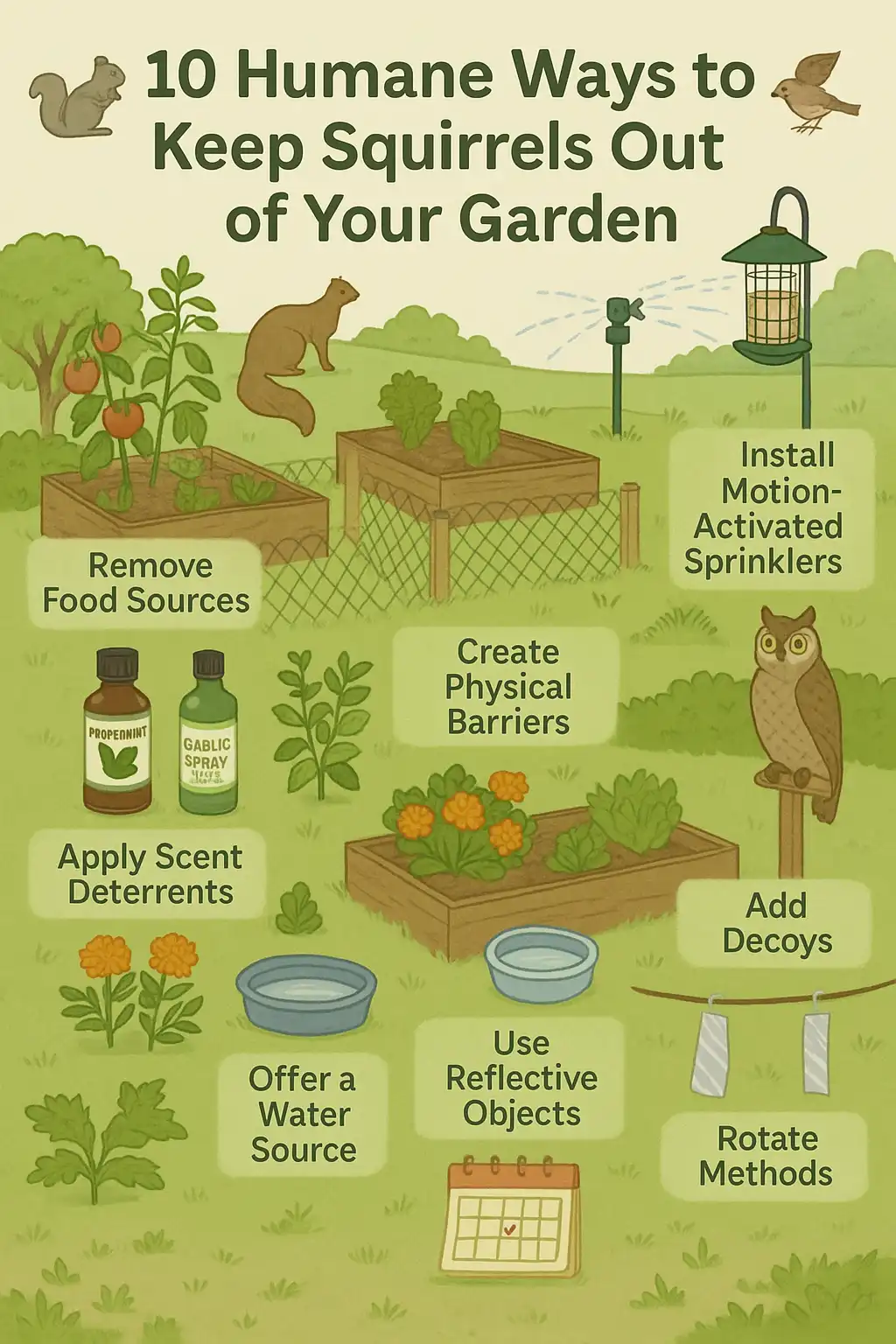
Not every squirrel problem needs to end in a trap. There are plenty of humane squirrel removal methods that let you protect your garden while keeping the animals safe. The key is to make your space less appealing—without causing harm.
Here are 10 non-toxic techniques that work:
-
Remove food sources: Pick ripe fruits, secure trash bins, and clean up fallen nuts regularly.
-
Use squirrel-proof bird feeders: Choose feeders with cages or weighted access flaps.
-
Install motion-activated sprinklers: A sudden spray of water is enough to send squirrels running.
-
Apply scent deterrents: Use peppermint oil, predator urine, or garlic spray to keep them away.
-
Create physical barriers: Surround plants with chicken wire, cloches, or fencing.
-
Add decoys: Owls or fake snakes can scare off squirrels, especially when moved frequently.
-
Companion planting: Add mint, marigolds, or daffodils to deter squirrels naturally.
-
Offer a water source: A simple bowl can distract squirrels from digging in your soil.
-
Use reflective objects: Hang CDs or foil strips to confuse and deter with light and motion.
-
Rotate methods: Switch up your tactics every few weeks so squirrels don’t adapt.
Humane deterrents work best when you accept that some wildlife will always be nearby. The goal isn’t to eliminate squirrels, it’s to teach them your garden is off-limits.
What Not to Plant If You Have Squirrel Problems
Some plants are just too tempting for squirrels to resist. If you’re serious about keeping them away, it helps to know what not to plant in your garden.
Avoid these squirrel favorites:
-
Sunflowers: The seeds are a high-protein snack squirrels love to steal.
-
Corn: Both sweet corn and decorative varieties attract squirrels as they ripen.
-
Nuts: Trees or shrubs that produce acorns, pecans, or hazelnuts invite digging and storing.
-
Berries: Strawberries, raspberries, and blueberries are soft, sweet, and irresistible.
If you still want these plants in your garden, try growing them in elevated containers, using cages, or surrounding them with scented deterrent plants. It’s not always about removal—sometimes it’s about smart placement and protection.
My neighbor once planted this beautiful, neat row of strawberries. She said, “I was so excited,” then laughed, “until I came out one morning and every single berry was gone. Just little stems left!” She was heartbroken. The next year, she surrounded the patch with mint and threw netting over the top. “Not a single squirrel touched them after that,” she said, grinning. “It was like I finally outsmarted them.”
Sometimes, a bit of trial and error is all it takes to find what really works.
Plants That Keep Squirrels Away
One of the easiest ways to deter squirrels is by growing plants they naturally dislike. These plants either smell too strong, taste too bitter, or are mildly toxic, making your garden far less appealing.
Try planting these around garden beds, borders, or even in pots near entry points:
-
Nasturtiums – Their peppery scent and taste are a big turn-off for squirrels.
-
Lily of the Valley – Beautiful but toxic, it sends a clear “keep out” signal.
-
Hot peppers – Both the plants and their oils can deter squirrels naturally.
-
Geraniums – Their strong, somewhat citrusy smell repels many garden pests.
The bonus? All of these plants add color and character to your garden. You’re not just repelling squirrels—you’re creating a space that’s lush, fragrant, and full of life.
