

You’ve spent weeks nurturing your garden, only to wake up and find it stripped clean overnight. If you’ve spotted hoof prints or nibbled stems, you’re likely dealing with an uninvited guest: deer. These gentle-looking grazers can devastate a garden in a single visit.
Protecting your plants doesn’t have to be a losing battle. With the right combination of methods, you can create a space that’s both lush and deer-proof.
How to Keep Deer Out of Garden
Why Deer Are a Garden Problem
1. Deer Are Opportunistic Feeders
Deer are not picky eaters when food is scarce. While they may prefer tender shoots, fruits, and flowering plants, they’ll graze on almost anything in your garden when their natural food sources are low. This includes shrubs, vegetables, and even thorny perennials. Their flexible diet makes nearly every garden vulnerable.
2. Feeding Patterns Are Seasonal and Persistent
Deer feeding habits fluctuate with the seasons. In spring and summer, they target soft, new growth, especially seedlings. In fall and winter, they forage aggressively for survival, often stripping bark from trees and gnawing on woody stems. Once they’ve found a reliable food source, they’ll return night after night, establishing a destructive pattern.
3. Their Physical Abilities Bypass Common Barriers
Deer can jump up to eight feet from a standing position and squeeze through surprisingly small gaps in fencing. Many gardeners underestimate this agility, using fences that are too low or materials that don’t hold up. This makes most DIY barriers ineffective unless designed specifically with deer in mind.
A few years ago, I planted a raised bed full of heirloom tomatoes and sweet basil—my pride and joy for that summer. I’d read that strong-smelling herbs helped repel deer, so I skipped the fencing. One morning, I stepped outside to find my garden half-eaten, trampled, and smeared with muddy hoofprints. It wasn’t just the plants that were gone—it was the entire season’s effort. That was the turning point when I realized scent alone wasn’t enough; understanding deer behavior had to be the first step in garden defense.
Best Physical Barriers to Block Deer Access
When it comes to protecting your garden from deer, physical barriers remain the most effective first line of defense. These methods work by blocking or confusing a deer’s ability to enter your space, forcing them to move on in search of easier food.
1. Build a Fence That’s Truly Deer-Proof
A common mistake gardeners make is installing fences that are too low. Deer can easily jump 7 to 8 feet, especially if they have a clear landing area. For maximum effectiveness, your fence should be:
- At least 8 feet tall
- Made from durable materials like wood, welded wire, or poly mesh
- Installed flush with the ground to prevent deer from slipping underneath
Electric fencing is another option. While it doesn’t physically block deer, a single zap can teach them to avoid your garden. However, these systems require careful setup and regular maintenance.
2. Try a Double-Fence Setup
If height is a challenge due to aesthetics or cost, a double fence system can be just as effective. Deer struggle with depth perception, so two shorter fences—one about 4 to 5 feet high and the other placed 3 to 5 feet inside—create a visual deterrent. It confuses them and reduces the likelihood they’ll attempt to jump over both.
3. Use Rock Borders and Raised Beds Strategically
While not barriers in the traditional sense, wide rock borders or raised beds can help disrupt deer movement. A 6- to 8-foot-wide border of uneven terrain (like boulders or mulch mounds) creates physical discomfort and a visual challenge for deer. These are best used in combination with fencing to slow their approach.
4. Don’t Forget Garden Entry Points
Gates and entryways are often the weak points in an otherwise solid setup. Use secure latches and avoid gaps larger than 6 inches. Mesh netting or chicken wire can reinforce vulnerable areas, especially around low spots or uneven ground.
Physical deterrents may require upfront investment, but they pay off by drastically reducing deer intrusion. Even a simple, well-placed fence can save a season’s worth of produce and blooms.
Top Deer-Resistant Plants
Choosing the right plants can naturally deter deer. These varieties are unappealing due to texture, taste, or scent:
Aromatic Herbs & Strong Scents
-
Lavender – Fragrant, low-maintenance, repels deer with strong aroma.
-
Rosemary – Spiky, aromatic, disliked by deer.
-
Thyme – Compact, fragrant groundcover with deer-repelling oils.
Textured Foliage
-
Lamb’s Ear – Soft, fuzzy leaves make chewing uncomfortable.
-
Russian Sage – Woody stems and silvery leaves with a strong scent.
Ornamentals
-
Peonies – Bloom early, but are rarely eaten.
-
Alliums – Onion-scented blooms keep deer away.
-
Sedum – Succulent leaves, tough texture, unpalatable to deer.
Smart Landscaping Choices to Deter Deer
Thoughtful garden design strengthens your defense and complements plant selection:
Strategic Plant Placement
-
Frame vulnerable plants with deer-resistant ones to act as natural buffers.
-
Use companion planting to mask scents and confuse browsing deer.
Diversity & Rotation
-
Mix annuals and perennials to disrupt deer feeding patterns.
-
Rotate plant types each season to keep deer from forming habits.
Visual & Motion-Based Deterrents
-
Motion-Activated Sprinklers – Surprise deer with a sudden spray.
-
Wind Chimes / Flashing Lights – Use sound and motion to keep them cautious.
-
Foil/Pie Pans – Simple, reflective deterrents for open garden zones.
Unpredictability
-
Rotate deterrents and change placement regularly.
-
Deer adapt quickly; keep them guessing with changing patterns.
Scent and Spray Repellents for Ongoing Control
While fences and motion deterrents act as physical and behavioral barriers, scent-based repellents provide a chemical line of defense that directly targets a deer’s powerful sense of smell. These repellents don’t harm the animal; they simply make your garden smell unpleasant enough to keep deer away. Used consistently and strategically, they are an essential part of a multi-layered deer management plan.
Understanding How Scent-Based Repellents Work
Deer rely heavily on scent to detect predators and identify food sources. Repellents work by overwhelming or mimicking danger signals that prompt deer to steer clear. The most common repellent categories include odor-based, taste-based, and dual-action formulas. Odor repellents are typically made with ingredients such as garlic, rotten eggs, predator urine, and blood meal, while taste-based ones may use bittering agents or spicy substances like hot pepper.
The trick is to apply these sprays to both foliage and surrounding surfaces so the smell lingers even after rain or watering. Many commercial formulas are rain-resistant, but homemade versions may need more frequent reapplication.
Homemade vs Commercial Options
Homemade sprays are budget-friendly and often rely on ingredients you already have in the kitchen. A simple blend of eggs, garlic, and water can be effective, though it may need to be reapplied every few days. Soap shavings, coffee grounds, and even fabric softener sheets placed around the garden also act as scent repellents, albeit with mixed results.
Commercial repellents offer greater convenience and longer-lasting effects. Many products include multiple deterrent ingredients and are formulated to stick to leaves through light rain or dew. Some brands also rotate their formulas seasonally to reduce the risk of deer becoming accustomed to the scent.
Tips for Maximum Effectiveness
For scent repellents to work long-term, they must be part of a routine. Apply them consistently, especially after rain, and rotate between different products or recipes every few weeks. This prevents deer from adjusting to any one formula. Target high-risk areas such as new growth, fruiting plants, and garden entry points.
It’s also a good idea to apply repellents before deer become a problem. If a deer has already established a feeding pattern in your yard, breaking that habit will take longer and require combining repellents with other deterrents.
A Scent Strategy That Saved My Garden
In one particularly dry summer, local deer were venturing closer to homes and chewing everything in sight. I started alternating between a commercial garlic-and-pepper spray and a homemade mix of eggs and soap flakes. I sprayed twice a week and focused on the edges of my garden beds. The difference was clear—plants that had been stripped down began to recover, and the nightly hoofprints vanished.
Scent and spray repellents won’t stop deer singlehandedly, but when used consistently and creatively, they add a powerful layer of defense to any garden.
Smart DIY and Natural Solutions From Local Gardeners
In addition to commercial products and structural deterrents, many gardeners turn to do-it-yourself methods and natural strategies for controlling deer. These homemade solutions are often inexpensive, customizable, and surprisingly effective when used consistently. Drawing on everyday items and community wisdom, these approaches give gardeners another toolset for protecting their plants.
Using Household Items as Scent Repellents
Common kitchen and household items can be repurposed to create natural scent barriers. Strong-smelling substances like garlic, vinegar, chili powder, bar soap, and coffee grounds all have reputations for driving deer away. Many gardeners shave bars of heavily perfumed soap and scatter the pieces around their beds or hang them in mesh bags from stakes. The scent, especially after rain, lingers and acts as a mild deterrent.
Coffee grounds serve a dual purpose by not only repelling deer but also enriching the soil. Similarly, vinegar mixed with water can be sprayed around the perimeter of a garden, though care must be taken not to apply it directly to sensitive plants.
DIY Sprays That Get Results
One of the most widely used homemade deer repellents combines eggs, garlic, and cayenne pepper. This concoction, blended with water and strained, can be sprayed directly onto plants. The smell mimics decay or predator presence, while the spicy taste discourages further browsing.
Another variation includes mixing dish soap with crushed hot pepper and a bit of oil to help the solution adhere to foliage. These homemade sprays usually need to be reapplied every three to five days, especially after rain or heavy watering.
Confusing Deer With Depth and Movement
Deer are cautious animals that rely on depth perception and habit. Local gardeners have found success in disrupting these senses with simple, low-cost tactics. For example, hanging strips of aluminum foil, old CDs, or pinwheels from branches or stakes introduces constant motion and light reflection that startles approaching deer.
Some even create mock “barriers” using fishing line strung at varying heights. Because it’s nearly invisible, deer hesitate to cross, unsure of the space or what might be lurking behind it. This trick, while not foolproof, adds psychological complexity to a deer’s path and may discourage further intrusion.
Local Ingenuity in Action
One gardener I spoke with swears by her use of pet hair collected from her dog’s brush. She sprinkles it around her vegetable beds weekly, and the deer have stayed away for two seasons straight. Another neighbor places cut-up dryer sheets in small containers near her flower beds, a method that’s easy to maintain and unexpectedly effective.
While DIY solutions may not match the longevity of commercial products, they offer an affordable, accessible, and often creative way to reinforce deer deterrence. When layered with other methods, these natural tactics can be part of a robust and reliable garden defense plan.
What to Avoid: Common Deer Control Mistakes
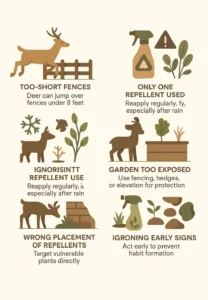
Using Fences That Are Too Short
Many gardeners assume that a standard garden fence will keep deer out. However, deer can jump vertically up to eight feet from a standing position. A fence under six feet tall is essentially useless against a determined deer. Even decorative fences or trellises may provide false confidence unless designed with deer in mind. If installing a tall fence isn’t possible, consider a double-layer approach to confuse depth perception.
Relying on a Single Repellent Method
One of the most common errors is depending on a single strategy, like a garlic spray or wind chime, to do all the work. Deer are intelligent and adaptable. What works today may lose its effectiveness in a week. Successful deterrence requires a multi-layered approach: combining scent, motion, physical barriers, and plant selection.
Inconsistent Application of Scent Repellents
Homemade and commercial sprays are only effective when applied consistently. After rain, watering, or heavy dew, their strength diminishes significantly. Gardeners often forget to reapply, especially during busy growing seasons. Skipping even one week can be enough for deer to return and reestablish a feeding habit.
Underestimating Seasonal Pressure
Deer feeding habits change with the seasons. In spring and summer, they target soft shoots and young growth; in fall and winter, they forage aggressively due to scarcity. Gardeners sometimes let their guard down in mid-summer or late fall, not realizing that seasonal shifts can increase deer traffic. Prevention should be year-round, not seasonal.
Leaving the Garden Too Exposed
Open lawns, straight garden rows, and low or missing entry barriers invite deer in. A garden without borders, gates, or visual obstructions feels like easy access. Even if you’re limited in fencing options, adding visual clutter—like raised beds, shrubs, or large planters- can help reduce visibility and make deer hesitate.
Using Scent-Based Deterrents in the Wrong Areas
Another common mistake is only applying sprays directly to plants. To build an effective scent wall, deterrents should also be applied to garden perimeters, paths, and high-traffic zones. Think of it as building layers of defense, not just protecting the most vulnerable crops.
Ignoring the Signs of Early Damage
Nibbled leaves, broken stems, and hoofprints are early warning signs. Waiting until full plant destruction occurs means you’ve already allowed deer to form a habit. Immediate action, even at the first sign, is crucial to reversing deer behavior before it becomes routine.
Want a Deer-Resistant Lawn That Looks Great Too?
DNG Amigos provides professional lawn care services in Cleveland, Texas, with the expertise to keep your yard healthy and beautiful, even in deer-prone areas. From strategic landscaping to maintenance plans that discourage deer traffic, their team can help transform your outdoor space into something both lush and low-risk. Contact us today.
Final Thoughts
Keeping deer out of your garden isn’t about finding one perfect solution, it’s about crafting a system that works in layers. From fencing and scent repellents to motion-based deterrents and thoughtful plant choices, the more varied your approach, the more resilient your garden becomes.
Deer are persistent, but so are gardeners. With patience, observation, and a willingness to adapt, you can reclaim your green space and enjoy the rewards of a thriving, undisturbed garden. The key is consistency: apply, rotate, monitor, and repeat. Over time, your yard will become a place deer think twice about visiting.
Frequently Asked Questions
What scent keeps deer away the most effectively?
Rotten egg-based sprays are among the most effective scent deterrents. Many commercial products use sulfur compounds found in eggs, garlic, and predator urine to create a strong, unpleasant smell. These odors overwhelm a deer’s sensitive nose and trigger a flight response.
Do motion-activated sprinklers really work?
Yes, motion-activated sprinklers can be highly effective when placed strategically. The sudden movement and spray startle deer, interrupting their feeding behavior. For best results, rotate their position every couple of weeks to prevent deer from becoming familiar with the setup.
Are there any plants deer won’t eat at all?
While no plant is completely deer-proof, some are rarely touched. These include peonies, alliums, lavender, Russian sage, and sedums. Deer tend to avoid plants with strong scents, fuzzy leaves, or bitter tastes, especially when other food sources are available.
How often should I reapply scent repellents?
Reapplication depends on the product and weather conditions. Homemade sprays may need to be applied every 3 to 5 days, while commercial repellents often last one to two weeks. Always reapply after rain, irrigation, or heavy dew to maintain effectiveness.
Can I use pet dogs or their scent to keep deer away?
Yes, the scent of a dog can deter deer. Some gardeners use pet hair or bedding near garden beds. Active dogs that patrol the yard also help by leaving a constant scent trail and occasionally scaring off intruders.
