

There’s nothing worse than a dead mower on a hot Cleveland, TX afternoon. You’re ready to work, but your lawn mower won’t start, leaving your grass and frustration growing. Let’s break down the common culprits so you can get mowing again fast.
Why a Lawn Mower Won’t Start
A lawn mower won’t start when vital parts like the spark plug, fuel system, or air filter fail. In humid Cleveland, stale fuel or a clogged carburetor is often to blame. A quick inspection of these areas can save you a call to the repair shop.
How to Troubleshoot a Lawn Mower That Won’t Start
When your lawn mower won’t start, begin with the basics. Check if you have fresh fuel, gasoline older than 30 days can lose its combustibility, especially in Cleveland’s warm, humid conditions. If in doubt, drain and replace it with fresh gas.
Next, inspect the spark plug. A fouled or worn plug can stop ignition altogether. Remove it, clean off any carbon build-up, and check the gap (a business card thickness works in a pinch). Reinstall or replace as needed.
Don’t overlook the air filter. A clogged filter restricts airflow, starving the engine of oxygen. Pop it out and tap away debris, or swap in a new one if it’s too dirty. The carburetor can also gum up with deposits; a spritz of cleaner might restore function without a full teardown. According to the University of Missouri Extension, a clean air filter is essential for engine performance because it ensures proper airflow and prevents dirt from damaging internal parts.
And here’s a quick story: Last spring, after a rainy week here in Cleveland, my own mower sat unused. When I tried to start it, nothing. Turns out moisture in the fuel line and an old spark plug were the culprits. Ten minutes and a new plug later, I was back in business!
Finally, verify that the safety switches, like the brake bar or blade lever, are fully engaged. Many mowers won’t start if these features aren’t activated.
Your Mower Won’t Start
If your lawn mower won’t start after basic checks, it’s time to go deeper. Look at the starter rope or starter cord. If it’s hard to pull, your mower deck may be clogged with old grass clippings. Turn the mower off, tip it carefully, and clear out any debris.
Another area is the flywheel brake. This safety system stops the blade when you release the handle. If the brake bar isn’t pressed fully or the cable is stuck, the mower won’t fire up. Lubricate the cable or adjust tension if needed.
Also, verify that the fuel cap vent isn’t blocked. A clogged vent causes vapor lock, cutting off fuel flow. Simply loosen the cap and try starting again — if it works, replace the cap.
Always attempt to start your mower on a level, hard surface. Soft or uneven ground can make pulling the cord harder and skew your diagnosis.
Check the Fuel System: Quality, Cap Vent & Lines
One of the most common reasons a lawn mower won’t start is bad fuel. In Cleveland, TX, our hot, humid climate accelerates fuel degradation. Gasoline left in your mower for more than 30 days can go stale, forming varnish-like deposits that clog the carburetor and fuel lines. Always start the season with fresh fuel, and add a stabilizer if storing gas for later use.
Inspect the fuel lines for cracks, leaks, or blockages. Over time, heat and ethanol in gasoline can break down rubber lines. Gently squeeze along the line — if it feels brittle or you see seepage, replace it.
Don’t forget the fuel cap vent. This tiny hole allows air into the tank so fuel can flow freely. If it’s blocked, a vacuum forms and starves the engine. Try loosening the cap slightly and starting the mower. If that works, clean or replace the cap.
Local tip: In Cleveland’s summer heat, store gas cans in a shaded, well-ventilated spot to slow down fuel breakdown.
Inspect Spark & Ignition: Plug, Coil, Timing
If your lawn mower won’t start, the issue may lie with the spark plug or ignition system. Begin by removing the spark plug — look for heavy carbon deposits, a worn electrode, or moisture. A dirty or damaged plug can’t ignite the fuel-air mixture. Clean it carefully or replace it with a fresh one.
Check the ignition coil next. The coil generates a voltage to create the spark. A failing coil might show a weak or no spark at all. Some folks in Cleveland use an ohmmeter to test — a coil reading near 2.8 ohms often signals trouble.
Don’t overlook timing components like the flywheel key. If your mower hit a rock or hard object, the key may have sheared, throwing off the timing between the flywheel and crankshaft. That tiny piece of metal keeps the spark firing at the right moment. Replacing it can restore normal operation.
A quick trick: Use a business card to check the coil gap — it’s the perfect thickness for proper spacing.
Airflow & Debris: Filter, Deck, Blade Obstructions
A lawn mower won’t start if the engine can’t breathe. The first thing to check is the air filter. A clogged filter chokes off oxygen, making it impossible for the fuel-air mix to ignite. Remove the filter, tap out loose dirt, or replace it if it looks overly dirty or oily.
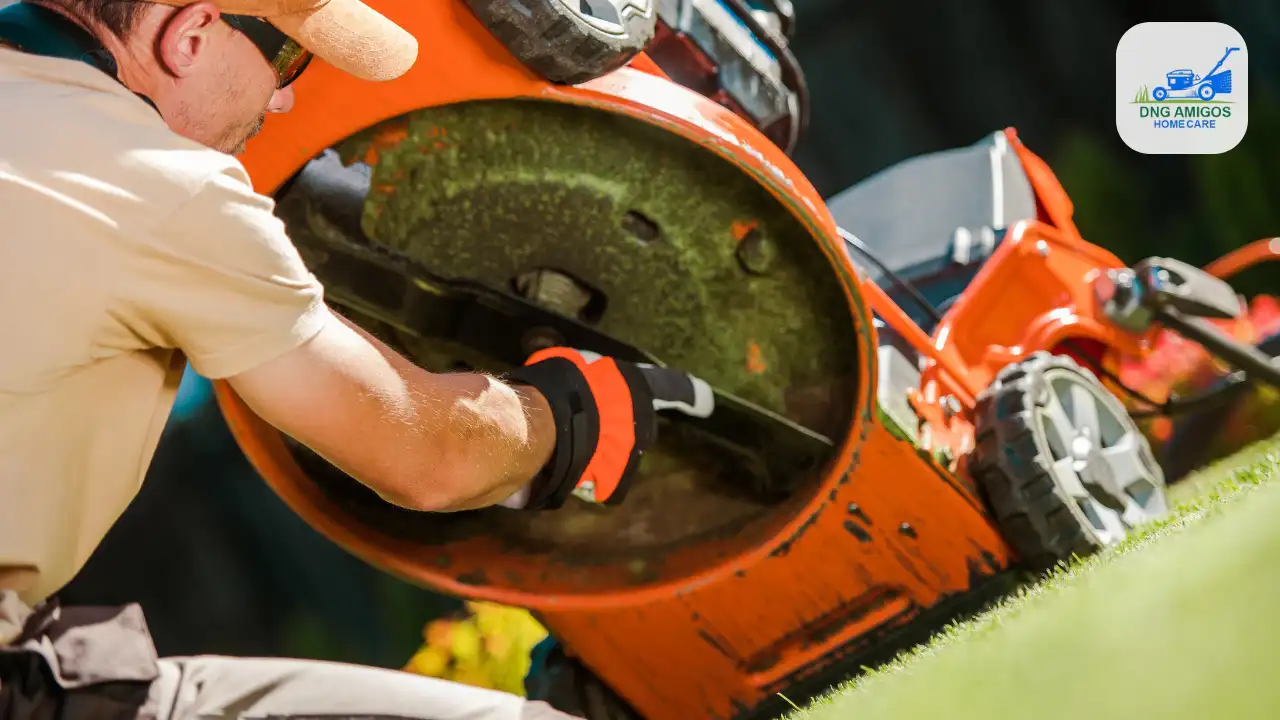
Next, look under the mower deck. Built-up grass clippings, mud, or leaves can jam the blade, making the engine hard or impossible to turn over. Disconnect the spark plug for safety, then carefully clean out debris with a stick or brush.
Also, inspect around the blade itself. Twigs, string, or wire can wrap around the spindle and stop movement. Clearing this not only helps start it but also prevents long-term damage to the mower’s drive system.
Tip: After heavy mowing in damp Cleveland yards, give the deck a quick clean — it can save you headaches later.
Safety Features & Starter Mechanisms
Many times, a lawn mower won’t start simply because a safety feature is preventing it. Start by checking the brake bar (also called the operator presence control or safety bar). This must be fully engaged when you pull the starter rope or turn the key, if it’s loose or the cable is stuck, the engine won’t fire.
Inspect the starter rope or cord itself. If it’s hard to pull, the engine might be locked due to a jammed blade or internal issue. Ensure the mower is on level ground and that no debris is obstructing movement.
Some models have additional safety switches — for example, under the seat (for riding mowers) or on the blade lever. Make sure all are engaged as designed. These systems are there to protect you, but they can also stop the mower from starting if not functioning correctly.
Pro tip: If the starter cord is frayed or sticky, replace or lubricate it to avoid future failure.
Mechanical Timing: Flywheel Key & Compression
If your lawn mower won’t start after checking fuel, spark, and airflow, the problem could be mechanical. The flywheel key is a tiny metal piece that aligns the flywheel and crankshaft. If your mower hits a rock or root, the key might shear, throwing off timing and stopping the engine from sparking at the right moment. You’ll need to remove the flywheel to inspect and replace it if damaged.
Compression is another hidden culprit. Without proper compression, the engine can’t ignite the fuel-air mixture. Worn piston rings, a blown head gasket, or a stuck valve can cause this. You can do a quick compression check by feeling resistance as you pull the starter rope. No resistance? It’s likely time for professional repair.
A local mower tech in Cleveland once showed me how a simple sheared key caused weeks of frustration for a neighbor — the fix took 15 minutes once spotted!
When To Call a Professional or Replace a Mower
If your lawn mower won’t start even after checking the fuel, spark, air, and mechanical parts, it may be time to bring in a pro. Issues like internal engine damage, persistent compression loss, or a cracked carburetor are best handled by a qualified technician. Many small engine repair shops in Cleveland, TX, offer quick diagnostics, saving you time and guesswork.
Consider replacement if your mower is over 5–8 years old (the typical gas mower lifespan) and repairs cost more than half the price of a new unit. Frequent breakdowns, excessive smoke, or severe rust are also signs it’s time for an upgrade.
Before you decide, weigh repair costs against the price of a reliable new mower — sometimes peace of mind is worth it.
Need Help With Your Lawn in Cleveland, TX?
If you need lawn services in Cleveland, TX, the team at DNG Amigos is here to help! We provide reliable service so you can enjoy a well-kept yard again.
Final Thoughts
A lawn mower won’t start for many reasons, from stale fuel and dirty spark plugs to clogged air filters or a sheared flywheel key. The key is to check each system step-by-step so you can spot the issue quickly.
In Cleveland, TX’s humid climate, taking a few preventive measures, like using fresh gas, cleaning your mower deck, and doing seasonal tune-ups, can keep your mower running strong all year long. And when in doubt, a local repair pro can help you return to a neat, healthy lawn without the guesswork.
Frequently Asked Questions
How do I know if my lawn mower has a bad spark plug?
If your mower won’t start or runs rough, remove the spark plug and check for carbon buildup, cracks, or a worn electrode. Replace it if cleaning doesn’t help.
Can old fuel really stop my lawn mower from starting?
Yes! Gasoline older than 30 days can go stale, especially in Cleveland’s heat. It can clog the carburetor and prevent combustion. Drain old fuel and refill with fresh gas.
Why does my starter cord feel stuck?
A stuck starter cord often means the mower deck or blade is jammed with debris. Disconnect the spark plug, tip the mower safely, and clear out clippings or twigs.
What’s the flywheel key, and why does it matter?
The flywheel key keeps engine timing in sync. If it shears (often after hitting a rock), the spark won’t occur at the right moment, and the engine won’t start.
When should I replace my lawn mower instead of repairing it?
If your mower is over 5–8 years old, or repairs cost more than half the price of a new unit, replacement is often the smarter choice.
